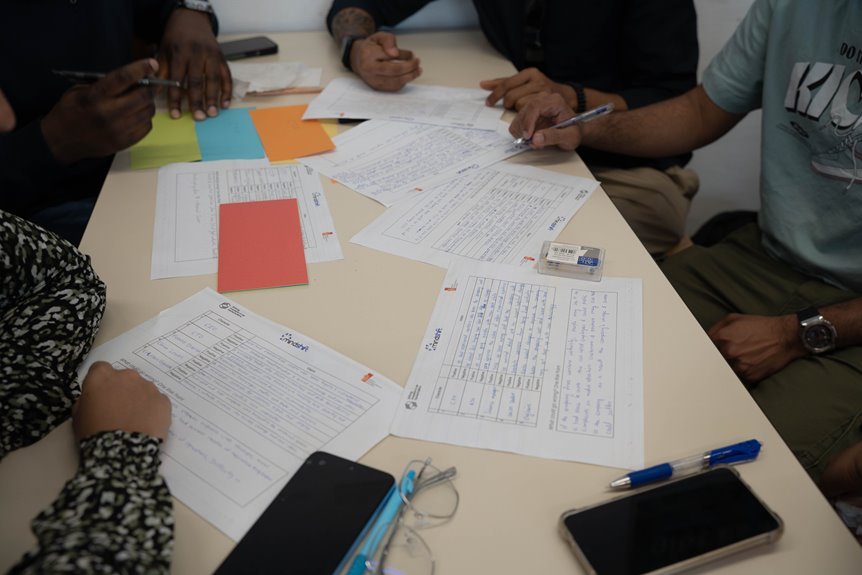
Collaborative note sharing works best when it feels like a smooth workflow with clear accountability. Teams should define a single source of truth, explicit roles, and simple review cycles that produce a traceable decision trail. Choose interoperable tools, consistent formats, and scalable governance that match responsibilities. Establish norms, templates, tagging, and version control to keep notes discoverable and editable. The result is continuous learning and incremental improvement, but practical questions remain about implementation details and ongoing trade-offs.
What Collaborative Note Sharing Actually Looks Like in Practice
Collaborative note sharing in practice resembles a well-orchestrated workflow where teams contribute, review, and refine a single source of truth. This approach demonstrates consistent version control, transparent accountability, and clear decision trails.
Practitioners observe collaboration psychology insights guiding role clarity and feedback cycles.
Effective note governance aligns permissions with responsibilities, reducing ambiguity while enabling自由 collaboration, rapid iteration, and evidence-based learning across disciplines.
Choosing Tools and Formats That Fit How Your Team Works
Choosing tools and formats that fit how the team works requires a practical, evidence-based assessment of current workflows, tool capabilities, and governance needs.
The discussion centers on alignment patterns and scalable collaboration, avoiding one-size-fits-all solutions.
Teams weigh automation options, interoperability, and discoverability, selecting formats that minimize friction, encourage contribution, and preserve context.
This approach supports adaptable, transparent note sharing without rigid mandates.
Establishing Clear Norms, Templates, and Version Control
Establishing clear norms, templates, and version control provides a practical foundation for consistent note sharing.
Establishing norms clarify responsibilities, expectations, and decision rights, reducing friction in collaboration workflows.
Templates standardize structure, enabling rapid contribution and review.
Version control tracks changes, preserves history, and supports accountability.
The approach reinforces trust, accelerates iteration, and aligns teammates toward shared documentation goals without restricting creative input or independent thinking.
Tagging, Search, and Workflow Patterns That Save Time
Tagging, search, and workflow patterns streamline what has already been set up by norms and templates, turning notes into a navigable and actionable repository.
The approach favors tagging conventions that support consistent categorization and robust search ergonomics, enabling faster discovery.
Practically, teams align workflows with shared vocabularies, improving collaboration, reducing backtracking, and sustaining momentum without sacrificing autonomy or adaptability.
Evidence-based practices reinforce reliable, time-saving outcomes.
Metrics, Pitfalls, and Habits to Sustain Long-Term Value
How should teams measure value, anticipate common missteps, and cultivate durable habits that keep collaborative note sharing effective over time? The study favors conceptual metrics and ongoing feedback over one-off targets. Practical, evidence-based guidance emphasizes lightweight dashboards, regular retros, and transparent ownership. Pitfalls include over-structuring and under-communicating. Establish collaborative rituals that reinforce learning, accountability, and flexible adaptation for long-term value.
Frequently Asked Questions
How Do We Handle External Collaborators’ Access and Edits?
External collaboration requires robust access control, granular permissions, and clear edits and versioning, minimizing drift. Privacy considerations guide data exposure. Onboarding speed hinges on automated provisioning, while licensing costs incentivize tiered access and cost-aware collaboration.
Can We Retroactively Adjust Notes Without Breaking History?
Retroactive edits can be made cautiously, but may jeopardize history integrity; collaborators should document changes, use versioned snapshots, and communicate consensus to preserve an auditable trail while maintaining practical, evidence-based flexibility for a freedom-seeking team.
What Privacy Concerns Arise With Shared Notes?
Silence flickers like a lantern; privacy concerns emerge when notes travel. Access controls shape who sees what, and when. The practical, evidence-based view: granular permissions, audit trails, and consent-driven sharing safeguard collective freedom.
How Do We Onboard New Teammates Quickly to the System?
Onboarding new teammates quickly to the system relies on onboarding templates and quick start guides, enabling practical, collaborative, evidence-based adoption; the approach respects autonomy, reduces friction, and ensures consistent access, training, and governance across diverse contributors.
What Are the Costs and Licensing Implications for Tools?
Alliteration anchors assessment: costs compound, contracts complicate, collaborative licensing concerns, access governance issues. The analysis notes that practical budgeting favors scalable subscriptions, transparent licensing terms, governance protocols, and evidence-based comparisons for flexible, freedom-loving teams.
Conclusion
A pragmatic, collaborative note system is the operating system of teamwork, not a decorative folder. When norms, templates, and versioning are crystal clear, everyone contributes with confidence, and the sum becomes far more reliable than any single repository. The approach scales, reduces miscommunication, and accelerates learning through constant feedback loops. Run it like a living protocol, not a rigid policy—because without ongoing adaptation, even the best structure collapses faster than a stapler in a hurricane. Lightweight, rigorous, repeatedly proven.