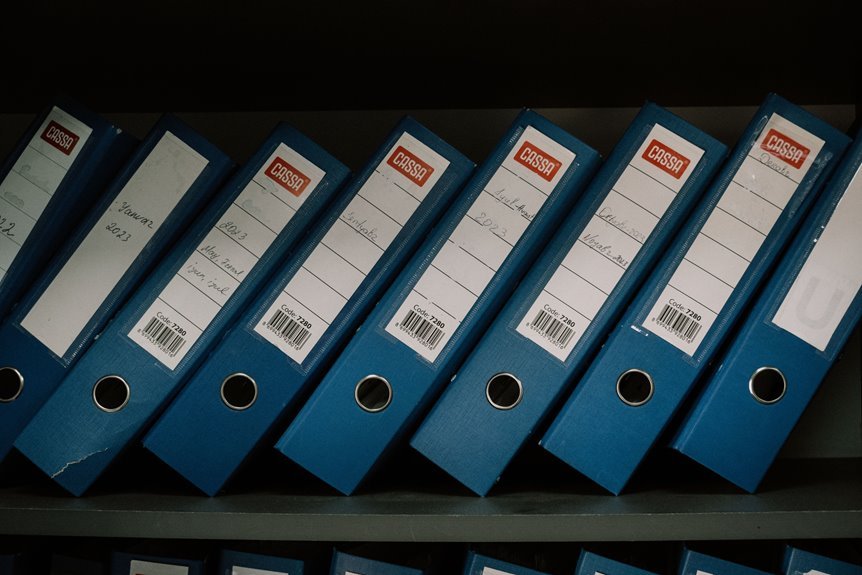
Digital asset records must be understood as an interconnected system of taxonomy, governance, naming, folders, and versioning. A clear structure aligns metadata with a scalable naming convention and folder schema, enabling fast search and policy-driven growth. Version history provides auditable trails, while defined roles and workflows ensure accountability. This approach reduces ambiguity and supports scalable stewardship, yet the key decisions and tradeoffs require careful consideration before proceeding. The next steps reveal where governance choices most impact outcomes.
What Digital Asset Records Are and Why They Matter
Digital asset records are the structured documentation that chronicles the creation, use, lineage, and ownership of digital items such as images, videos, documents, and datasets. This framework clarifies accountability, aids governance, and enables strategic decision-making.
A digital asset taxonomy organizes classes and relationships, while metadata governance ensures consistent, accurate descriptors. Together, they support freedom through transparent, accountable asset stewardship.
Build a Simple Naming Convention That Scales
A simple naming convention that scales is built by establishing a minimal, consistent set of name components and rules, then applying them uniformly across all asset types. The framework emphasizes Quality naming and tagging governance, minimizing ambiguity while enabling policy-driven growth. It supports governance-minded teams seeking freedom through clarity, reuse, and scalable standards that adapt without sacrificing discipline or control.
Structuring Folders and Metadata for Fast Search
Effective folder architecture and metadata design enable rapid retrieval and consistent policy enforcement across asset types.
The approach aligns a conceptual taxonomy with pragmatic folder schemas, ensuring scalable access controls and predictable search outcomes.
This structured framework supports metadata governance, clarifying responsibilities, standards, and workflows.
It fosters freedom to innovate while maintaining governance, transparency, and rapid discovery across diverse digital assets.
Versioning and Change History You Can Actually Follow
Versioning and change history should be accessible and auditable across asset types, providing a clear, actionable trail of edits without ambiguity. The approach emphasizes centralized version management and disciplined metadata capture, enabling consistent change traceability. Clear ownership, timestamps, and rationale support governance while preserving freedom to evolve assets. Structured controls prevent divergence, ensuring verifiability, accountability, and scalable collaboration across teams.
Practical Steps to Implement and Avoid Common Pitfalls
Organizing digital asset records requires actionable steps that build on solid version-management foundations. Practitioners should establish clear metadata schemas and centralized policies, aligning roles with governance standards. Implement workflow automation to streamline approvals and revisions, while maintaining audit trails. Enforce access control to protect sensitive assets, and periodically review procedures to avoid drift. Emphasize training and measured pacing for sustainable, freedom-loving efficiency.
Frequently Asked Questions
How Do I Handle Conflicting Asset Licenses Across Versions?
Conflicting licenses require governance and audit. The system should flag discrepancies, enforce version control, and maintain metadata tagging across assets. A strategic plan maps ownership, reconciles licenses, and preserves freedom while ensuring compliant, transparent, repeatable decisions.
What Tools Reliably Automate Asset Tagging at Scale?
Tagging automation tools reliably scale across enterprises, optimizing workflow and coverage. They integrate metadata governance, enforce consistency, and reduce manual toil, enabling strategic freedom. The approach prioritizes governance, repeatable rules, audit trails, and scalable, platform-agnostic implementations.
How Should I Audit Access and Permissions for Assets?
Anachronism: The auditor declares, “Scanning the archives.” The approach to audit access and permission management centers on asset licensing, version conflicts, tagging automation, scale tools, metadata contribution, and organizational metrics as success indicators for non technical users.
Can Non-Technical Users Contribute Metadata Effectively?
Non-technical contributions can enhance metadata accessibility, provided governance standards are clear. The organization should structure roles, validation steps, and review cycles, ensuring guardianship of quality while enabling inclusive input for strategic, freedom-oriented collaboration.
What Metrics Indicate Successful Asset Organization Over Time?
Like a compass guiding the fleet, metrics indicate success: asset taxonomy completeness, governance metrics adherence, version control consistency, and metadata quality improvements over time, signaling disciplined stewardship and strategic freedom in digital asset organization.
Conclusion
A structured digital asset record system aligns taxonomy, governance, naming, folders, and versioning into a coherent framework. When roles and workflows are explicit, stewardship becomes transparent and scalable. A simple naming convention, aligned folder schemas, and centralized version history create auditable trails and rapid search. By enforcing metadata governance and clearly defined responsibilities, organizations reduce confusion, enable reuse, and support policy-driven growth. The result is strategic, resilient asset management with measurable accountability and sustainable governance.