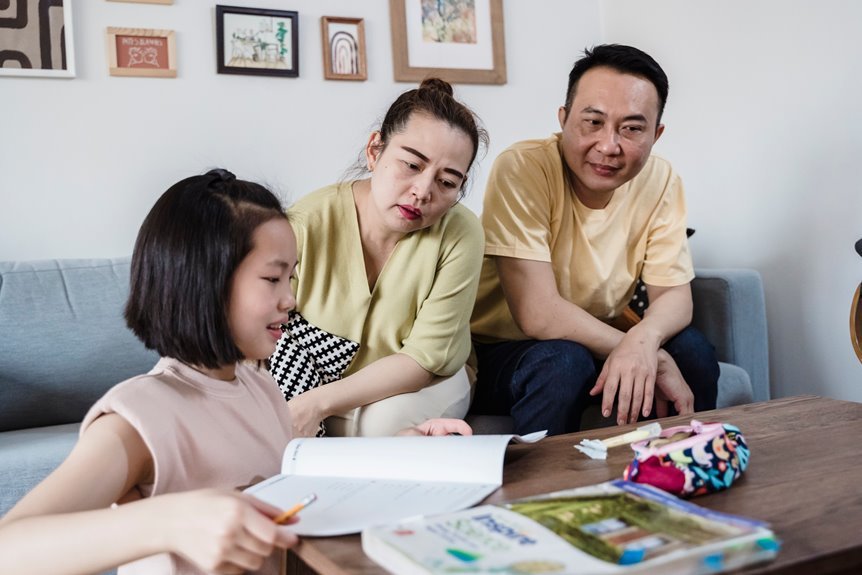
A thoughtful approach to homework support balances guidance with student autonomy. Start by clarifying roles, boundaries, and check-in points that promote independence. Use prompts that shape reasoning rather than provide solutions, and establish routines that track effort and accountability. Watch for signs a student needs more or less help, and intervene promptly yet sparingly. This pragmatic stance invites collaboration and data-driven adjustments, ensuring progress without taking over, while inviting you to consider what comes next.
How to Identify Your Homework Support Role
Identifying the appropriate homework support role starts with distinguishing between guiding, guiding with delegation, and providing limited scaffolding. The approach emphasizes pragmatic, evidence-based practices that respect learner autonomy while offering targeted structure. Homework insights emerge from observing patterns and adjusting support. Parent involvement is essential but not controlling, ensuring collaborative problem-solving that strengthens independence and confidence without overstepping boundaries.
Setting Boundaries That Empower Independent Work
Setting boundaries that empower independent work requires clear, process-driven guidelines that balance support with autonomy. A detached, evidence-based stance outlines expectations, timelines, and checkpoints that reinforce independence while preserving collaboration.
Practitioners emphasize independence boundaries and consistent port of call for help, ensuring questions target learning goals. Emphasize questioning guidance over directive solutions, fostering self-reliance, reflective practice, and adaptive support that respects learner agency.
Asking Questions That Guide Thinking, Not Solve It
Asking questions that guide thinking, rather than providing answers, centers on shaping the learner’s reasoning process through purposeful inquiry. The approach emphasizes collaboration, evidence-based prompts, and iterative reflection, avoiding shortcuts while preserving independence. By asking questions that invite exploration, tutors support sustained cognitive engagement, cultivate autonomy, and reduce dependence, fostering confident problem-solving that remains student-driven and resistive to quick, superficial fixes. Guiding thinking, not solving, sustains agency.
Creating a Structure That Supports Effort and Accountability
Creating a structure that supports effort and accountability builds on guiding thinking by embedding clear expectations, check-ins, and concrete routines. This approach couples independence support with boundary clarity, enabling students to autonomously pursue tasks while knowing when and how to seek help. A pragmatic, evidence-based framework emphasizes collaborative planning, progress tracking, and timely feedback to sustain motivation without micromanaging.
Reading Your Child’s Signals and Stepping In at the Right Time
Reading a child’s signals and stepping in at the right time requires a disciplined balance between observation and intervention. Practitioners and caregivers interpret onboarding cues to gauge readiness, offering support without commandeering tasks. By respecting autonomy boundaries, adults foster self-regulation and confidence. This approach emphasizes collaborative problem-solving, evidence-based timing, and timely, transparent communication to sustain motivation and minimize resistance.
Frequently Asked Questions
How Can I Tell if My Help Is Enabling Dependency?
The answer: It can be true that helping remains empowering when caregiver boundaries are set and autonomy signals are respected, ensuring support aids independence rather than dependency, and caregivers monitor reactions, adjusting prompts without taking over the task or solution.
When Should I Escalate Rather Than Assist in Homework?
A 72% median time per task suggests restraint matters: escalate when independence stalls, not when curiosity ensues. Parents’ role shifts to guiding prompts; parent–child collaboration thrives. They should escalate when goals aren’t advancing despite supportive, evidence-based strategies.
What Signs Indicate My Child Needs More Autonomy?
Signs of autonomy include steady task initiation, sustained focus with minimal prompts, and independent problem solving. Independence indicators show reduced parental input, increased responsibility for deadlines, and deliberate decision-making aligned with goals, reflecting confident self-regulation and collaborative, evidence-based growth.
How Often Should I Check in During Homework Time?
Coincidence marks the moment: how often checking in occurs, balancing autonomy signs with support. The approach enables independence, avoids enabling dependency, and respects evidence-based practice; a collaborative, pragmatic stance guides parents to monitor without micromanaging during homework time.
Which Tools Best Support Independent Practice?
Independent practice benefits from carefully selected tools; tool recommendations emphasize accessibility, feedback, and adaptability. The approach is pragmatic and collaborative, grounded in evidence; students gain autonomy while educators monitor progress, ensuring support remains proportional to individual needs and goals.
Conclusion
In guiding homework, the facilitator remains a steady compass, not a hands-on helm. By clarifying roles, posing thinking-provoking questions, and establishing routines of effort and accountability, independence grows from steady scaffolding. Signals are read with care, and interventions are timed to sustain motivation rather than rescue effort. The collaborative stance—focused, evidence-based, and iterative—fosters student agency, confidence, and resilience, like a lighthouse guiding a study voyage while the crew learns to chart its own course.